
Top Features to Look for in a New Boiler
Choosing the right boiler is about more than comparing brands or prices. The best model for your home should offer high efficiency, the correct output, smart heating compatibility and reliable long-term performance. This guide explains the key boiler features to consider, helping you make an informed decision and choose a heating system that delivers comfort, efficiency and lower running costs for years to come.

Why you can trust our content
We understand that the boiler industry can be confusing, with plenty of outdated or misleading information. That’s why we rely only on trusted, proven sources to guide our advice and installations:

At a glance
Whether you’re replacing an ageing unit in Putney or upgrading a system that’s simply not keeping up, knowing your options puts you in a much stronger position when speaking to an engineer.
For expert guidance on which boiler suits your home, speak to the team at Heat Pros for tailored advice.
What Are the Most Important Boiler Features to Consider?
With so many models on the market, it helps to focus on the features that will genuinely affect your day-to-day experience. Here are the areas worth prioritising:
- Efficiency rating – look for an ErP A-rated unit, which indicates a high seasonal efficiency
- Output (kW) – the boiler must be correctly sized for your property and hot water demand
- Smart thermostat compatibility – allows you to control heating remotely and programme precise schedules
- Weather compensation – automatically adjusts output based on outdoor temperature, reducing energy waste
- Modulation range – a boiler that can run at lower output levels when demand is low uses less energy overall
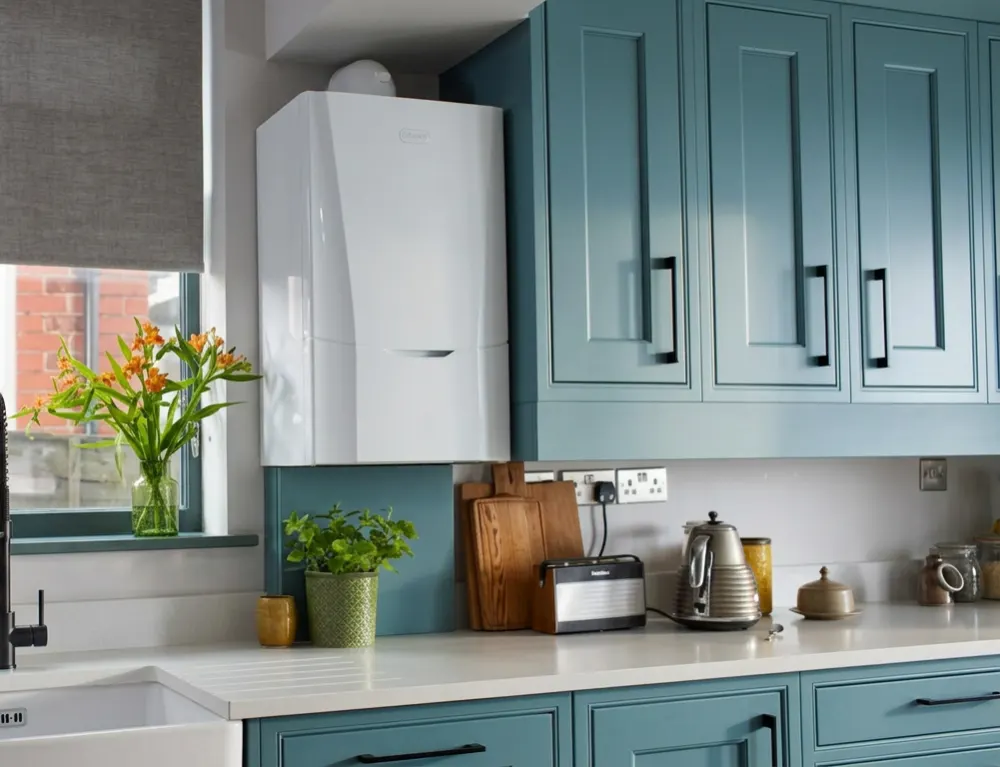
- Compact dimensions – particularly relevant for properties where cupboard or kitchen space is limited
Getting these fundamentals right matters more than focusing purely on brand reputation or aesthetics.
Efficiency Ratings Explained
All new gas boilers sold in the UK must meet minimum efficiency standards, but there is still a meaningful difference between models at the higher end of the scale. An A-rated boiler converts the vast majority of the gas it consumes into usable heat, with very little wasted through the flue.
Condensing boilers – which are now the legal standard for all new gas boiler installations – recover heat from exhaust gases that older non-condensing units simply expelled. This recovery process is what drives high efficiency ratings.
When reviewing efficiency figures, look for the seasonal efficiency rating rather than the peak figure, as seasonal data reflects real-world performance across a full heating season. A model with consistently high seasonal efficiency will typically deliver better results than one with an impressive peak figure that drops under everyday conditions.
Smart Controls and Connectivity
Modern boilers are increasingly designed to work alongside smart home technology. Compatibility with smart thermostats – such as Nest, Hive or Worcester’s Wave system – allows homeowners to manage their heating via a smartphone app, set zone-specific schedules and monitor usage patterns over time.
For busy households in South West London, this level of control is genuinely useful. You can switch the heating off remotely if you’re staying out later than planned, or pre-heat the home before you return. Some systems also provide diagnostic alerts, flagging potential issues before they develop into faults.
When choosing a boiler, ask your engineer which smart control options are compatible with the unit you’re considering. Not all thermostats work with all boilers, so it’s worth confirming compatibility at the survey stage.
See how much you could save
Which fuel powers your boiler?
Mains Gas
LPG
It just takes 60 Seconds
And then you can book a free consultation
How Do You Know If a Boiler Is the Right Size for Your Home?
Boiler sizing is one of the most commonly misunderstood aspects of a new installation. A boiler that’s too small will struggle to meet demand, particularly in larger properties with multiple bathrooms. One that’s oversized will cycle on and off repeatedly, reducing efficiency and placing unnecessary wear on components.
Correct sizing is calculated based on several factors:
- The number of rooms requiring heating
- The number of bathrooms and shower rooms
- The volume of hot water used at peak times
- The insulation quality of the property
- The heat loss characteristics of the building
A Gas Safe engineer should carry out a proper heat loss assessment before recommending a boiler size. Avoid any quote that doesn’t involve a property survey or at least a detailed phone consultation.
Manufacturer Warranties and After-Sales Support
A boiler’s warranty is a strong indicator of the manufacturer’s confidence in their product. Longer warranties typically accompany higher-quality units, and they provide a meaningful safety net during the years following installation.
It’s important to understand that most manufacturer warranties are conditional. They typically require:
- Annual servicing by a Gas Safe registered engineer
- The boiler to be registered with the manufacturer within a set period after fitting
- Installation by a qualified engineer using approved parts
Heat Pros registers every boiler on the customer’s behalf as part of the installation process. This ensures your warranty is valid from day one, with no admin headaches on your part.
A Practical Example: Matching Features to a Putney Home
A three-bedroom mid-terrace in Putney with a single bathroom and a busy household of four needed a replacement combi fitted quickly. The priority was reliability, smart control compatibility and a compact footprint to fit the existing kitchen cupboard.
An engineer assessed the property, calculated the correct output and recommended a mid-range unit with weather compensation and Hive compatibility. The compact chassis fitted the existing space without any modifications. Smart scheduling was set up on the same day, giving the household immediate control from their phones.
This kind of outcome – practical, well-specified and properly set up – is what separates a quality installation from a basic unit swap.
Related articles
Which fuel powers your boiler?
Mains Gas
LPG
At a glance
Whether you’re replacing an ageing unit in Putney or upgrading a system that’s simply not keeping up, knowing your options puts you in a much stronger position when speaking to an engineer.
For expert guidance on which boiler suits your home, speak to the team at Heat Pros for tailored advice.
What Are the Most Important Boiler Features to Consider?
With so many models on the market, it helps to focus on the features that will genuinely affect your day-to-day experience. Here are the areas worth prioritising:
- Efficiency rating – look for an ErP A-rated unit, which indicates a high seasonal efficiency
- Output (kW) – the boiler must be correctly sized for your property and hot water demand
- Smart thermostat compatibility – allows you to control heating remotely and programme precise schedules
- Weather compensation – automatically adjusts output based on outdoor temperature, reducing energy waste
- Modulation range – a boiler that can run at lower output levels when demand is low uses less energy overall
- Compact dimensions – particularly relevant for properties where cupboard or kitchen space is limited
Getting these fundamentals right matters more than focusing purely on brand reputation or aesthetics.
Efficiency Ratings Explained
All new gas boilers sold in the UK must meet minimum efficiency standards, but there is still a meaningful difference between models at the higher end of the scale. An A-rated boiler converts the vast majority of the gas it consumes into usable heat, with very little wasted through the flue.
Condensing boilers – which are now the legal standard for all new gas boiler installations – recover heat from exhaust gases that older non-condensing units simply expelled. This recovery process is what drives high efficiency ratings.
When reviewing efficiency figures, look for the seasonal efficiency rating rather than the peak figure, as seasonal data reflects real-world performance across a full heating season. A model with consistently high seasonal efficiency will typically deliver better results than one with an impressive peak figure that drops under everyday conditions.
Smart Controls and Connectivity
Modern boilers are increasingly designed to work alongside smart home technology. Compatibility with smart thermostats – such as Nest, Hive or Worcester’s Wave system – allows homeowners to manage their heating via a smartphone app, set zone-specific schedules and monitor usage patterns over time.
For busy households in South West London, this level of control is genuinely useful. You can switch the heating off remotely if you’re staying out later than planned, or pre-heat the home before you return. Some systems also provide diagnostic alerts, flagging potential issues before they develop into faults.
When choosing a boiler, ask your engineer which smart control options are compatible with the unit you’re considering. Not all thermostats work with all boilers, so it’s worth confirming compatibility at the survey stage.
See how much you could save
Which fuel powers your boiler?
Mains Gas
LPG
It just takes 60 Seconds
And then you can book a free consultation
How Do You Know If a Boiler Is the Right Size for Your Home?
Boiler sizing is one of the most commonly misunderstood aspects of a new installation. A boiler that’s too small will struggle to meet demand, particularly in larger properties with multiple bathrooms. One that’s oversized will cycle on and off repeatedly, reducing efficiency and placing unnecessary wear on components.
Correct sizing is calculated based on several factors:
- The number of rooms requiring heating
- The number of bathrooms and shower rooms
- The volume of hot water used at peak times
- The insulation quality of the property
- The heat loss characteristics of the building
A Gas Safe engineer should carry out a proper heat loss assessment before recommending a boiler size. Avoid any quote that doesn’t involve a property survey or at least a detailed phone consultation.
Manufacturer Warranties and After-Sales Support
A boiler’s warranty is a strong indicator of the manufacturer’s confidence in their product. Longer warranties typically accompany higher-quality units, and they provide a meaningful safety net during the years following installation.
It’s important to understand that most manufacturer warranties are conditional. They typically require:
- Annual servicing by a Gas Safe registered engineer
- The boiler to be registered with the manufacturer within a set period after fitting
- Installation by a qualified engineer using approved parts
Heat Pros registers every boiler on the customer’s behalf as part of the installation process. This ensures your warranty is valid from day one, with no admin headaches on your part.
A Practical Example: Matching Features to a Putney Home
A three-bedroom mid-terrace in Putney with a single bathroom and a busy household of four needed a replacement combi fitted quickly. The priority was reliability, smart control compatibility and a compact footprint to fit the existing kitchen cupboard.
An engineer assessed the property, calculated the correct output and recommended a mid-range unit with weather compensation and Hive compatibility. The compact chassis fitted the existing space without any modifications. Smart scheduling was set up on the same day, giving the household immediate control from their phones.
This kind of outcome – practical, well-specified and properly set up – is what separates a quality installation from a basic unit swap.