
Choosing Between Combi and Conventional Boilers
It’s one of the most common questions homeowners face when planning a new heating system: should you go for a combi boiler or stick with a conventional setup? The honest answer depends on your property, your household size and how you use hot water day to day. There’s no universal right answer, but there are…

Why you can trust our content
We understand that the boiler industry can be confusing, with plenty of outdated or misleading information. That’s why we rely only on trusted, proven sources to guide our advice and installations:

At a glance
It’s one of the most common questions homeowners face when planning a new heating system: should you go for a combi boiler or stick with a conventional setup? The honest answer depends on your property, your household size and how you use hot water day to day. There’s no universal right answer, but there are clear signals that point strongly in one direction or the other.
This guide breaks down the key differences between combi and conventional boilers in plain terms, helping you understand which type is likely to suit your home best before you speak to an engineer.
If you’re based in Richmond or the wider South West London area, speak to the Heat Pros team for an honest recommendation tailored to your property.
What Is a Combi Boiler and How Does It Work?
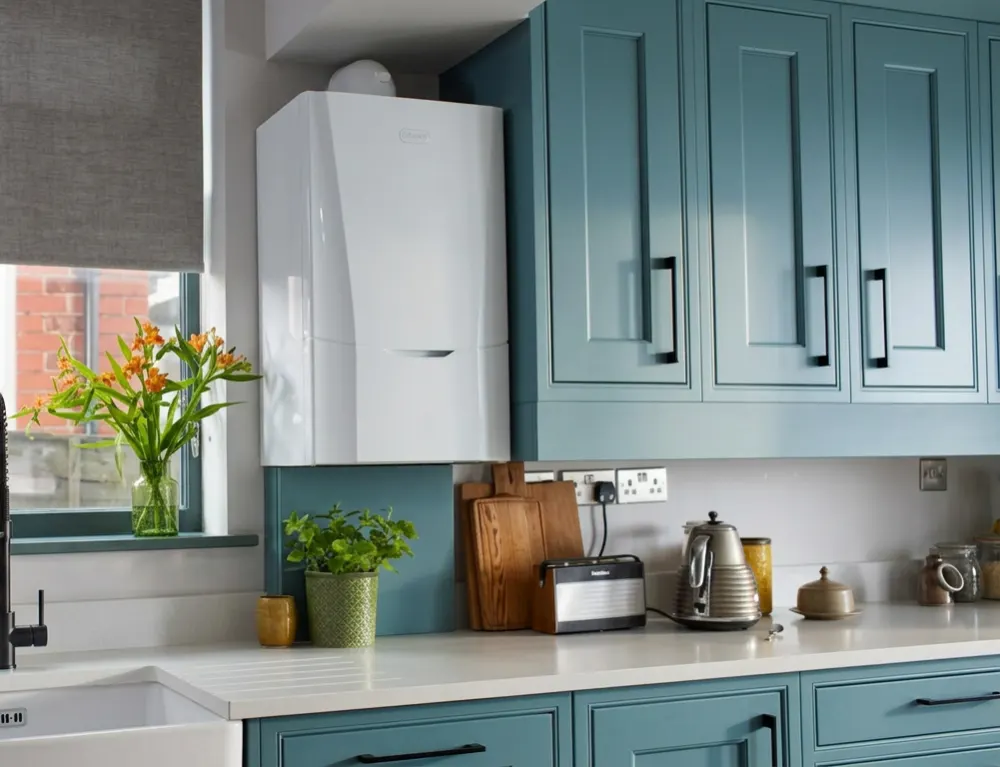
A combi (combination) boiler is a single, self-contained unit that provides both central heating and instant hot water on demand. There’s no separate hot water cylinder or cold water storage tank in the loft – the boiler heats water directly from the mains as it’s needed, which is why the hot water supply is almost instant and runs at mains pressure.
This makes combi boilers particularly well suited to:
- Smaller to medium-sized homes with one or two bathrooms
- Properties where storage space is limited
- Households that want to simplify their heating setup
- Homes where the hot water demand doesn’t involve multiple outlets running simultaneously
The compact nature of a combi boiler installation also makes it the most popular choice for flat conversions and terraced properties across London, where space is often at a premium.
What Is a Conventional Boiler System?
A conventional boiler – also referred to as a regular or heat-only boiler – works alongside a separate hot water cylinder (usually in an airing cupboard) and a cold water storage tank typically located in the loft. The boiler heats water and stores it in the cylinder, ready for use when needed.
This setup suits properties with:
- Higher hot water demand from multiple bathrooms used simultaneously
- Existing pipework already configured for a stored hot water system
- Homes where a combi boiler would be unable to meet peak hot water demand
- Properties with poor mains water pressure (since stored systems don’t rely on mains flow rate)
System boilers operate similarly but without the loft tank, taking their water supply directly from the mains while still using a hot water cylinder. They offer a middle ground between the simplicity of a combi and the capacity of a full regular boiler setup.
See how much you could save
Which fuel powers your boiler?
Mains Gas
LPG
It just takes 60 Seconds
And then you can book a free consultation
What Are the Practical Differences Day to Day?
In everyday use, the differences come down to convenience, water pressure and capacity. A combi provides hot water the moment you turn a tap, at mains pressure, without any pre-heating period. A conventional system requires the cylinder to have heated water stored in advance – running out during peak usage is possible if demand exceeds what was stored.
For a household of two in a Richmond apartment or compact terrace, a combi boiler installation is almost always the right choice. For a family of five in a larger period property with three bathrooms, a conventional or system boiler setup is likely to handle peak demand far more comfortably.
The key is honest assessment – not defaulting to whichever type is easiest to quote.
Does Converting from Conventional to Combi Make Sense?
This is a popular question – and the answer depends on whether a combi can realistically meet your home’s hot water demand. For properties where a single bathroom is used by two or three people and the existing cylinder is ageing, converting to a combi boiler makes a great deal of sense. The simplification of the system, combined with the removal of bulky storage components, is a genuine quality-of-life improvement.
However, for a larger Richmond townhouse with multiple en-suites and a high peak demand, switching to a combi may result in disappointment. The mains flow rate may simply not support the volume required when several outlets are in use at once.
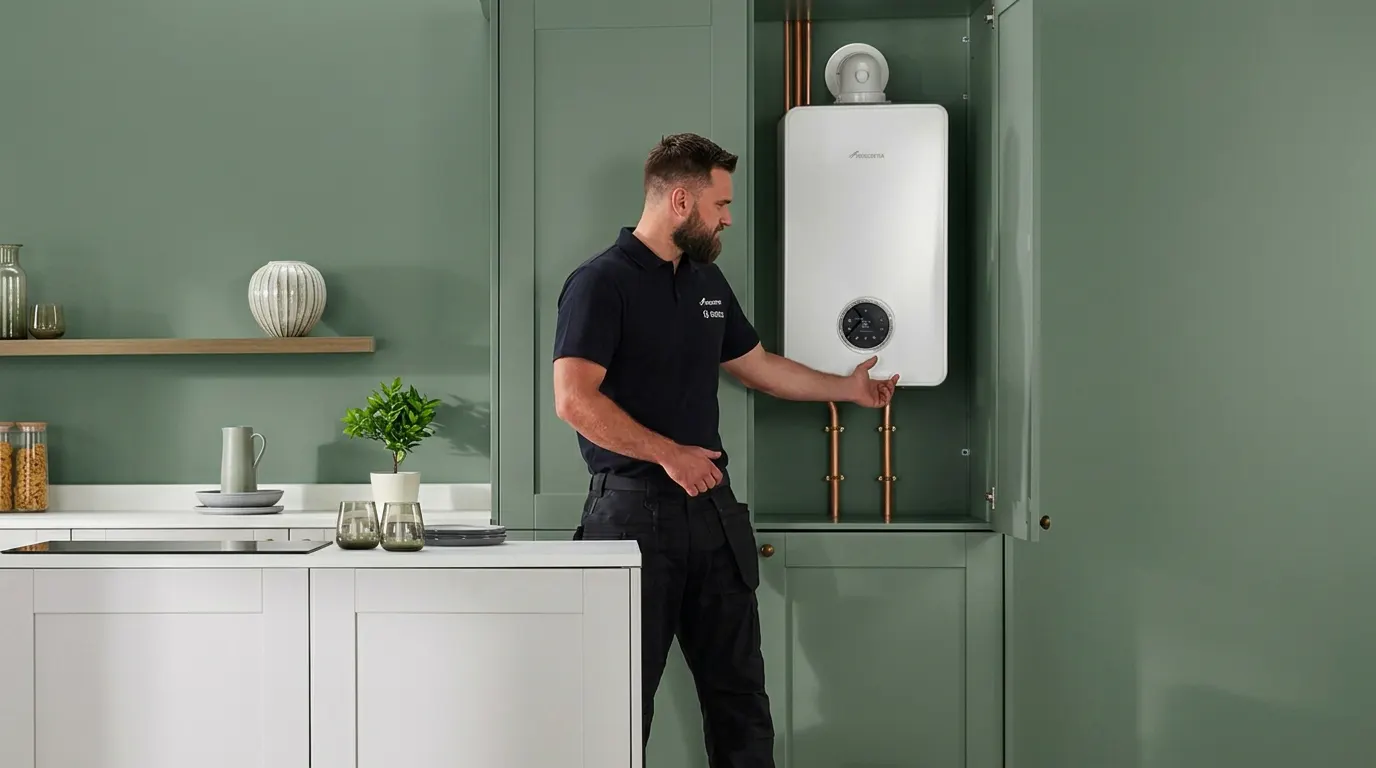
A proper survey before committing to a conversion avoids these problems. Heat Pros carries out a full assessment at the point of quotation to ensure the recommended boiler type genuinely suits the property.
Which Boiler Brands Work Best for Each Type?
Heat Pros fits combi boilers and conventional systems from Ideal, Vaillant, Worcester Bosch and Baxi. Each brand offers models across both boiler types, so brand preference alone doesn’t dictate which system you end up with.
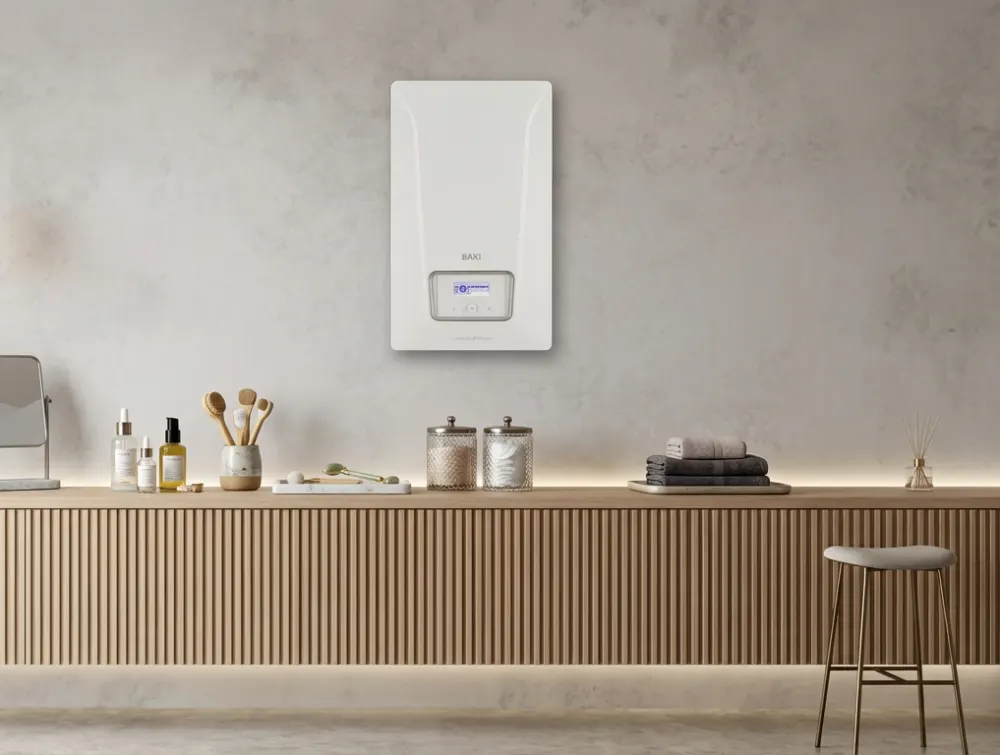
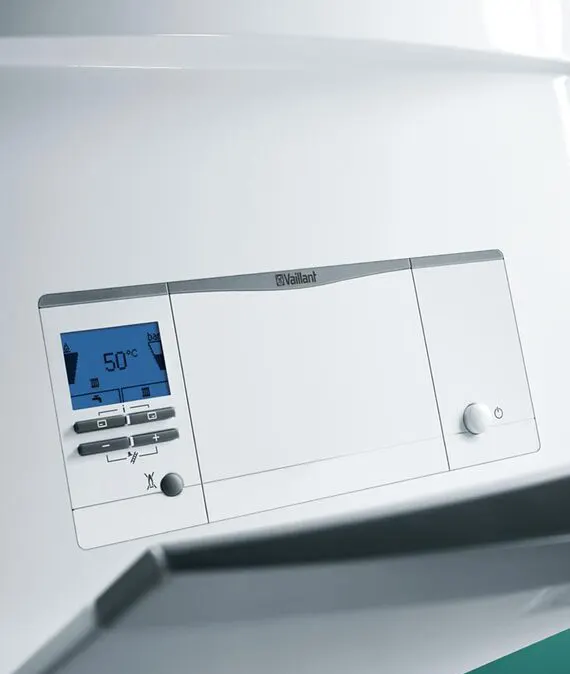
Baxi is an excellent budget-friendly option for combi boiler replacement in properties where a straightforward swap is appropriate. Vaillant and Worcester Bosch are particularly strong choices at the premium end – both brands offer highly efficient combi and system boiler ranges with excellent smart control integration.
Your engineer’s recommendation should always be based on what’s right for your property – not which unit carries the highest margin or is easiest to source that week.
Related articles
Which fuel powers your boiler?
Mains Gas
LPG
At a glance
It’s one of the most common questions homeowners face when planning a new heating system: should you go for a combi boiler or stick with a conventional setup? The honest answer depends on your property, your household size and how you use hot water day to day. There’s no universal right answer, but there are clear signals that point strongly in one direction or the other.
This guide breaks down the key differences between combi and conventional boilers in plain terms, helping you understand which type is likely to suit your home best before you speak to an engineer.
If you’re based in Richmond or the wider South West London area, speak to the Heat Pros team for an honest recommendation tailored to your property.
What Is a Combi Boiler and How Does It Work?
A combi (combination) boiler is a single, self-contained unit that provides both central heating and instant hot water on demand. There’s no separate hot water cylinder or cold water storage tank in the loft – the boiler heats water directly from the mains as it’s needed, which is why the hot water supply is almost instant and runs at mains pressure.
This makes combi boilers particularly well suited to:
- Smaller to medium-sized homes with one or two bathrooms
- Properties where storage space is limited
- Households that want to simplify their heating setup
- Homes where the hot water demand doesn’t involve multiple outlets running simultaneously
The compact nature of a combi boiler installation also makes it the most popular choice for flat conversions and terraced properties across London, where space is often at a premium.
What Is a Conventional Boiler System?
A conventional boiler – also referred to as a regular or heat-only boiler – works alongside a separate hot water cylinder (usually in an airing cupboard) and a cold water storage tank typically located in the loft. The boiler heats water and stores it in the cylinder, ready for use when needed.
This setup suits properties with:
- Higher hot water demand from multiple bathrooms used simultaneously
- Existing pipework already configured for a stored hot water system
- Homes where a combi boiler would be unable to meet peak hot water demand
- Properties with poor mains water pressure (since stored systems don’t rely on mains flow rate)
System boilers operate similarly but without the loft tank, taking their water supply directly from the mains while still using a hot water cylinder. They offer a middle ground between the simplicity of a combi and the capacity of a full regular boiler setup.
See how much you could save
Which fuel powers your boiler?
Mains Gas
LPG
It just takes 60 Seconds
And then you can book a free consultation
What Are the Practical Differences Day to Day?
In everyday use, the differences come down to convenience, water pressure and capacity. A combi provides hot water the moment you turn a tap, at mains pressure, without any pre-heating period. A conventional system requires the cylinder to have heated water stored in advance – running out during peak usage is possible if demand exceeds what was stored.
For a household of two in a Richmond apartment or compact terrace, a combi boiler installation is almost always the right choice. For a family of five in a larger period property with three bathrooms, a conventional or system boiler setup is likely to handle peak demand far more comfortably.
The key is honest assessment – not defaulting to whichever type is easiest to quote.
Does Converting from Conventional to Combi Make Sense?
This is a popular question – and the answer depends on whether a combi can realistically meet your home’s hot water demand. For properties where a single bathroom is used by two or three people and the existing cylinder is ageing, converting to a combi boiler makes a great deal of sense. The simplification of the system, combined with the removal of bulky storage components, is a genuine quality-of-life improvement.
However, for a larger Richmond townhouse with multiple en-suites and a high peak demand, switching to a combi may result in disappointment. The mains flow rate may simply not support the volume required when several outlets are in use at once.
A proper survey before committing to a conversion avoids these problems. Heat Pros carries out a full assessment at the point of quotation to ensure the recommended boiler type genuinely suits the property.
Which Boiler Brands Work Best for Each Type?
Heat Pros fits combi boilers and conventional systems from Ideal, Vaillant, Worcester Bosch and Baxi. Each brand offers models across both boiler types, so brand preference alone doesn’t dictate which system you end up with.
Baxi is an excellent budget-friendly option for combi boiler replacement in properties where a straightforward swap is appropriate. Vaillant and Worcester Bosch are particularly strong choices at the premium end – both brands offer highly efficient combi and system boiler ranges with excellent smart control integration.
Your engineer’s recommendation should always be based on what’s right for your property – not which unit carries the highest margin or is easiest to source that week.